Cairn Review
Cairn is exhausting, but I mean that in a complimentary way. Nothing in Cairn comes easy and it took one hundred and thirty four falls and seventeen deaths to get to the end of the journey. Cairn knocks you down, but since it’s extremely rewarding, you want to get up and try it again every time.
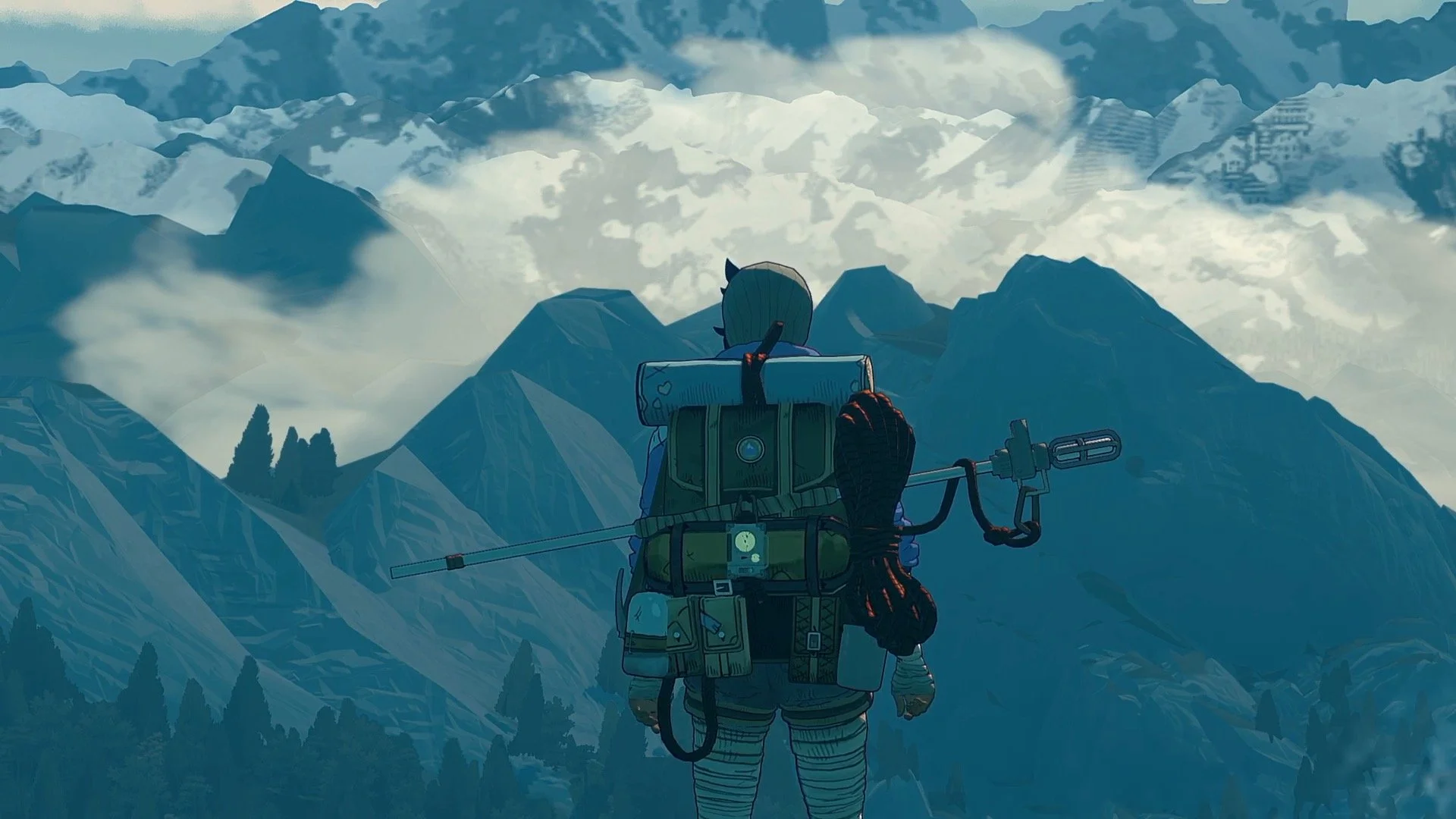
The atmosphere in Cairn is conducive to extreme immersion. It’s more than just the physical exertion from the tense, methodical climbing, it’s also the mental exhaustion from the constant focus, rationing supplies, being isolated, setbacks and the emotionally charged, but subdued minimalist narrative.
There are a handful of technical issues and a few design choices that slow down the ascent, but nothing that’s overly detrimental to what is an otherwise excellent adventure.
True to rock climbing, Cairn is definitely not for everyone, but for those willing, Cairn is an unforgettable experience that constantly rewards the player and without sounding hyperbolic, belongs in the pantheon of all-time indie greats.
9.5
If you want the full review with a lot more nuance, continue reading or watch the video
WHY Cairn BELONGS ALONGSIDe THE GREATEST INDIES EVER
Cairn begins in a rock climbing gym and with a few seconds of looking around it becomes evident that Aava is one of the world’s most experienced climbers, famously known for her achievements. The only thing that evades her is to reach the summit of Mount Kami, the unconquered, killer mountain that has taken thousands of lives. Very few that even attempt this feat have returned and Aava plans to be the first person to reach the summit of Kami, both literally and figuratively, inch by inch and no matter the cost.
For ages, mountains have served as a metaphor for roadblocks and giant obstacles in our path. Something insurmountable that prevents us getting to the wondrous valleys on the other side. Cairn isn’t just one of the most realistic and immsersive climbers, but it’s also an excellent allegory for being confronted by these mental blocks and I doubt it’s a coincidence that around the time development would have started on Cairn was around the same time that The Mountain is You was written.
In 2020, Brianna Wiest wrote “The Mountain is You” about how we all self sabotage and become the mountain ourselves. How we resist change, embrace bad habits that we have always depended on, and fail to move forward based on being chained to our past. The book teaches us to become brave and climb the mountain.
So you put your hand on the mountain, look up with no quest markers or HUD, just the knowledge that you need to go up, and take your first step. What’s extremely unique is that the gameplay at the very start of the game is the exact same at the very end. Which sounds like it could be flat and get tiresome by the end, but it’s the polar opposite. Not only is it unique, but it compels you to attempt it again just like a good roguelike loop or a souls-like boss that you know you can beat.
Cairn doesn’t feature a skill tree and you don’t learn new abilities. The only difference is that you learn what you’re capable of and push those limits, because you have no other choice. Even failing a section and attempting it again is unique because of the amount of variables each climb offers.
This addictive nature of the gameplay is evident immediately because I've never felt the need to stay longer than absolute necessity in a tutorial section, but in Cairn I wanted to climb every last wall in the gym. (you actually should climb every single wall and if you’re interested to learn why and 20 other tips and tricks, check out our Cairn Tips and Tricks.
The narrative crafted has impressive depth, which you can take it at face value or appreciate it for deeper and symbolic meanings. The narrative also isn’t heavy handed. The Game Bakers are precise about the explicit moments when they need to implement bits of story, most of which are told through sparse cutscenes, but also the implicit narrative done by planting seeds all around the world, which gives Cairn great depth
For the most part, Cairn is a quiet game with the score and dialogue being used sparingly. However, the scarcity of the elements combined with the excellent vocal performances and score, make their use much more impactful. You become immersed on your ascent of Kami as you become isolated and alone. The moments when the score builds in with this meditative ethereal music are heavy and it comes as no surprise that it’s the work of Martin Stig Andersen, the composer behind LIMBO, INSIDE and Control.
Cairn furthers the immersion with some of the best use of the DualSense since its introduction. Your climbot can occasionally relay voice messages to you from friends and family back on the ground, which get played through the controller speaker. Due to their limited use and how robotic tinny it sounds, these make it feel like climbot is right beside you. Furthermore, limbs can begin to shake when you don’t have a good hold, your stamina is depleting and the lactic acid is building up, which gets relayed to the player through great use of the precise DualSense vibration motor.
One of the other highlights of Cairn is the visuals. Instead of going for realism, The Game Bakers opt for a cel-shaded art style, which is not only stunning at all times, but feels timeless. The moments when you are climbing at the break of dawn and the pink hues of the sun begin to reveal the mountain face or how it feels to look back on what you have climbed when you reach a new summit are just a few of the endlessly breathtaking instances in Cairn.
CAIRN CRITICISMS
Technically, Cairn has some issues, but at a little over 20 people, it’s slightly expected for such a large undertaking. To begin with, there is a very inconsistent frame rate, which mostly doesn’t affect gameplay. Unfortunately, there were some instances when you are trying to drill a piton in the mountain, which requires perfect timing and it can cause enough of a hiccup to take a perfect placement to a crooked one, which will ruin your piton on removal. Clipping is also a pretty regular occurrence, with the most common culprit being the ropes, but occasionally hands, legs and feet can also clip weirdly through the mountain. Limbs can also become possessed from time to time as well. Finally, the cel shaded art style is gorgeous, but facial animations are unable to match the level of the narrative and vocal performances during impactful moments.
There were also a few design choices that seemed odd. The inability to fill your bottle up from rain water, even though you can fill it from waterfalls, springs as well as forage for berries and herbs. Finally, there were a few plot moments where you’re forced to use a lot of your supplies that you have been carefully rationing for narrative purposes, which feels unfair and also puts you at a disadvantage moving forward.
CAIRN FINAL THOUGHTS
The vision and commitment in Cairn is commendable as the gameplay at minute one is the same at hour fifteen, but no two climbs are ever the same, because of how unique and relentless it is. Everything is constantly in a state of flux and the experience is always unpredictable. Although it might look familiar, you have never played anything like Cairn.
Cairn has no levels, no ability tree, and no bosses. At a quick glance, Cairn appears one dimensional and nothing more than a hardcore rock climbing simulator. This couldn’t be further from the truth as Cairn features a deep narrative, where you aren’t sure if you’re the hero or the villain, powerful but subdued performances, a timeless art style and a constantly challenging gameplay loop. Cairn is an unforgettable experience that feels like nothing you’ve ever played.